
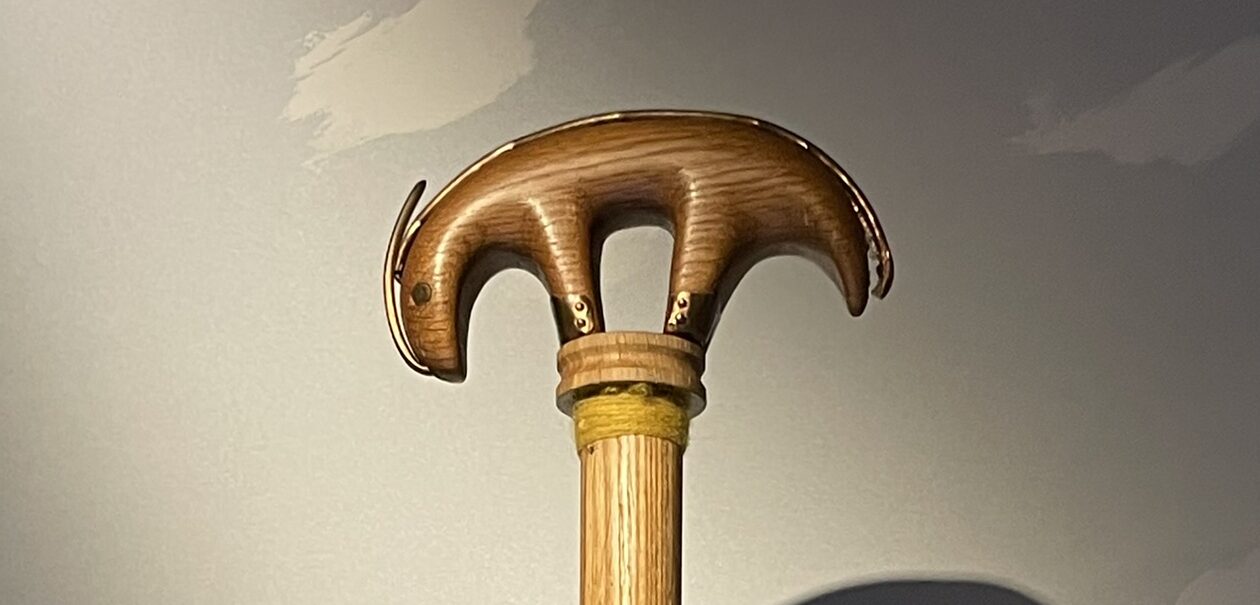

When the whisky distillery in Wooler, Northumberland approached me with a request to recreate the historic Tácnbora (Standard Bearer), I knew immediately that this project would be something special. The original carving is an iconic symbol of early Northumbrian identity, and being trusted to bring it back to life—faithfully, by hand, and using local materials—was both an honour and a challenge worth embracing.
This post documents the journey from raw Northumbrian oak to a fully carved, double‑sided Tácnbora, designed in Fusion 360 and carved here at FLI‑CNC. I’ve included space throughout where I’ll be adding images of each stage of the process.
Choosing the Right Oak: Local Wood for a Local Legend
The distillery wanted authenticity, and that meant starting with Northumbrian oak—timber with character, history, and a connection to the land that shaped the original Tácnbora.
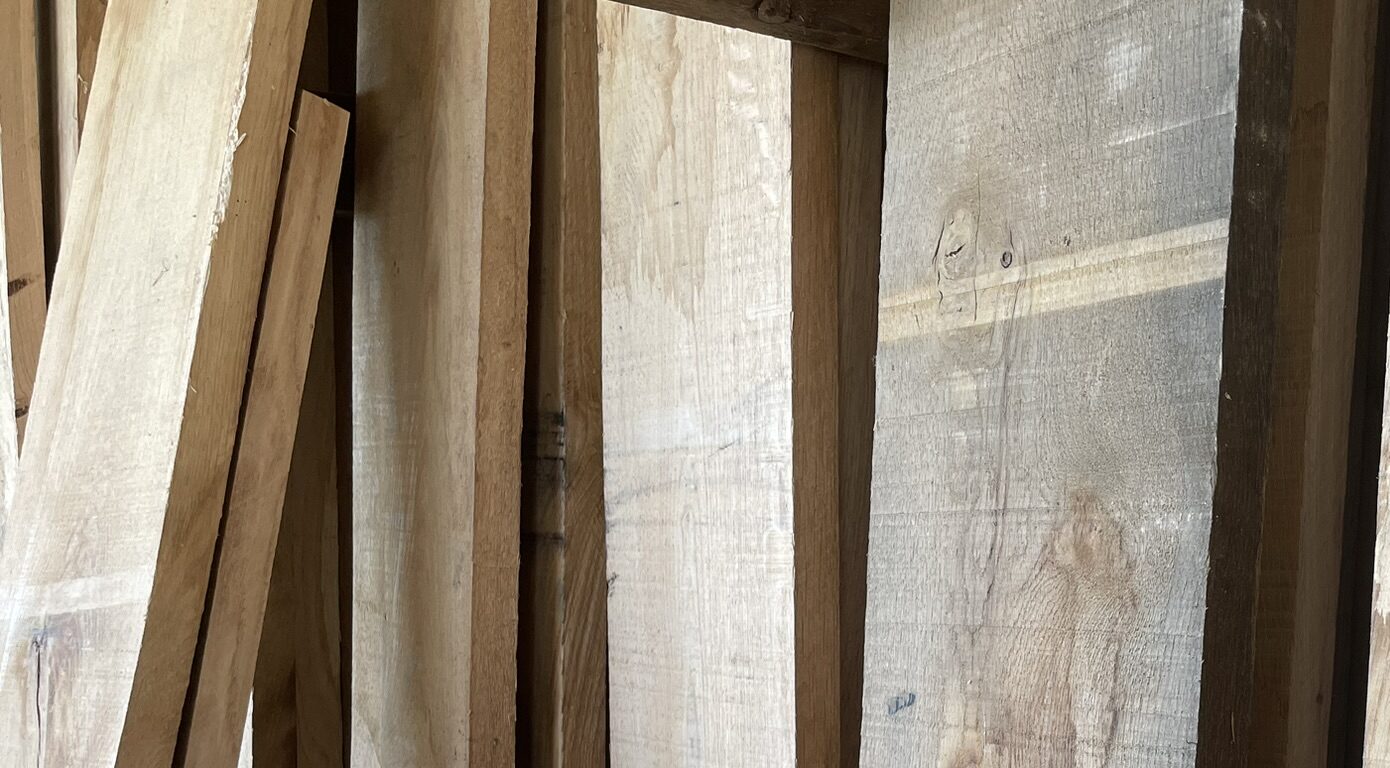
The grain, density, and natural colour variations of the oak would all influence the final look, so selecting the right pieces was the first crucial step.
Designing the Tácnbora in Fusion 360
To recreate the carving identically to the original, I began by modelling the figure in Fusion 360. This stage required a balance of historical accuracy and CNC‑friendly design.
- Maintaining the proportions and details of the original carving
- Preparing the model for a double‑sided machining process
- Ensuring clean toolpaths for fine detail work
- Accounting for wood movement and grain direction
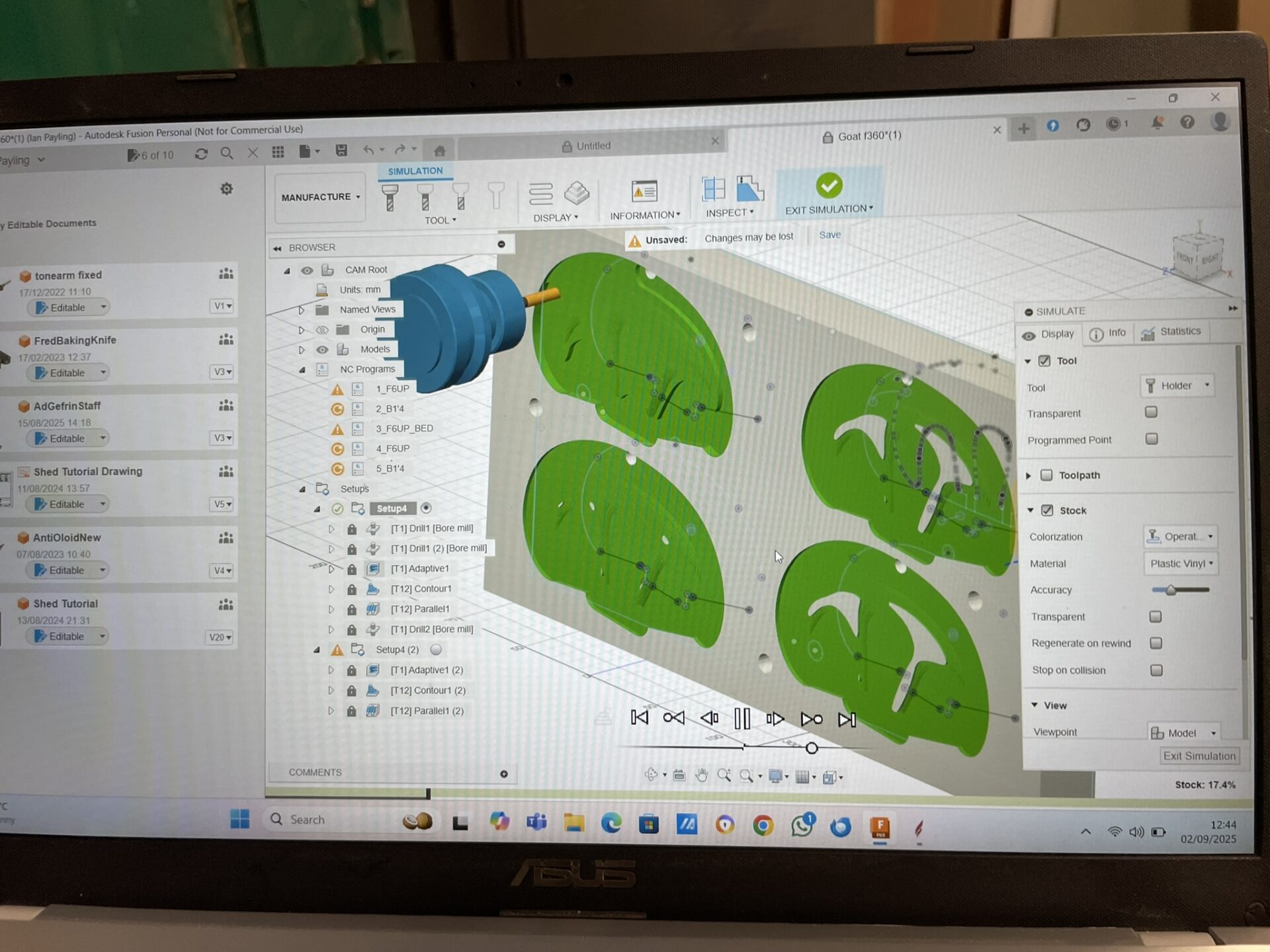
The digital model became the blueprint for everything that followed.
Setting Up the Double‑Sided CNC Carving
Carving a figure like this on both sides is a technical dance. Alignment is everything. One millimetre off, and the entire piece loses its symmetry.
- Creating precise registration points
- Designing matching fixtures for front and back operations
- Running test cuts to confirm alignment
- Dialling in feeds, speeds, and bit selection for oak
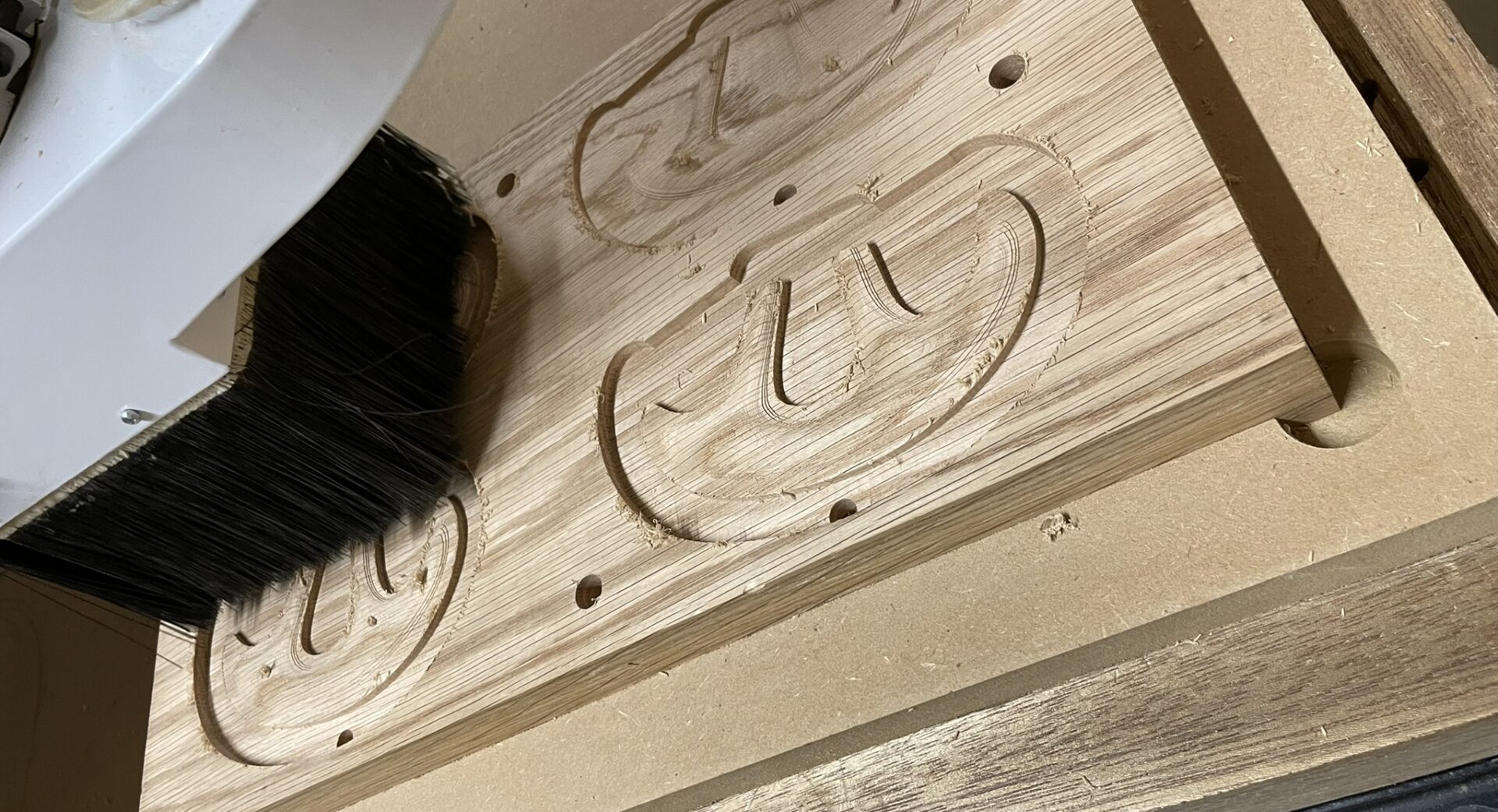
Once everything was locked in, the carving began—slow, steady, and incredibly satisfying to watch.
Bringing the Tácnbora to Life
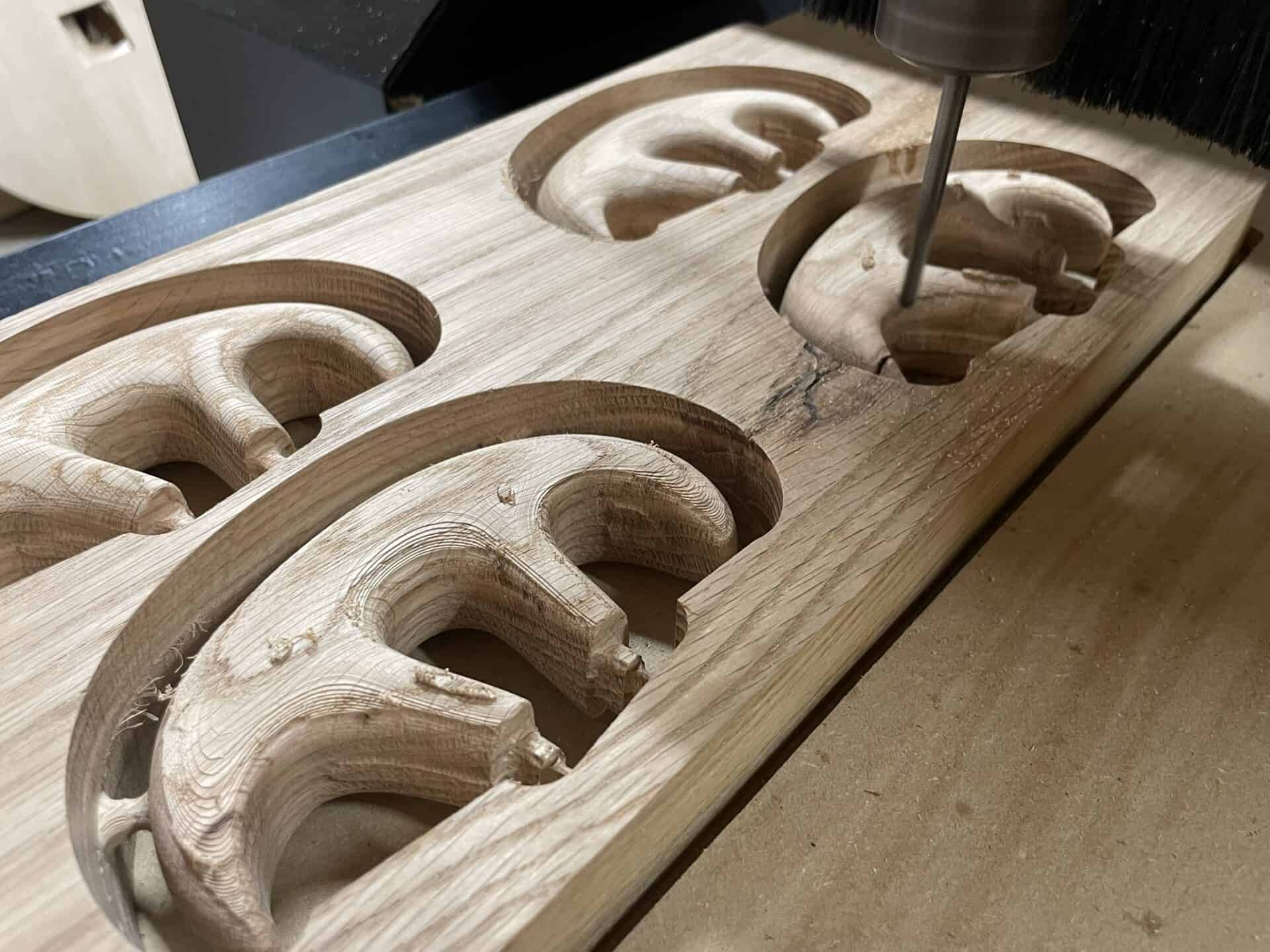
As the CNC removed layer after layer, the Tácnbora started to emerge from the oak. The shield, the cloak, the stance—each pass revealed more of the figure’s character.
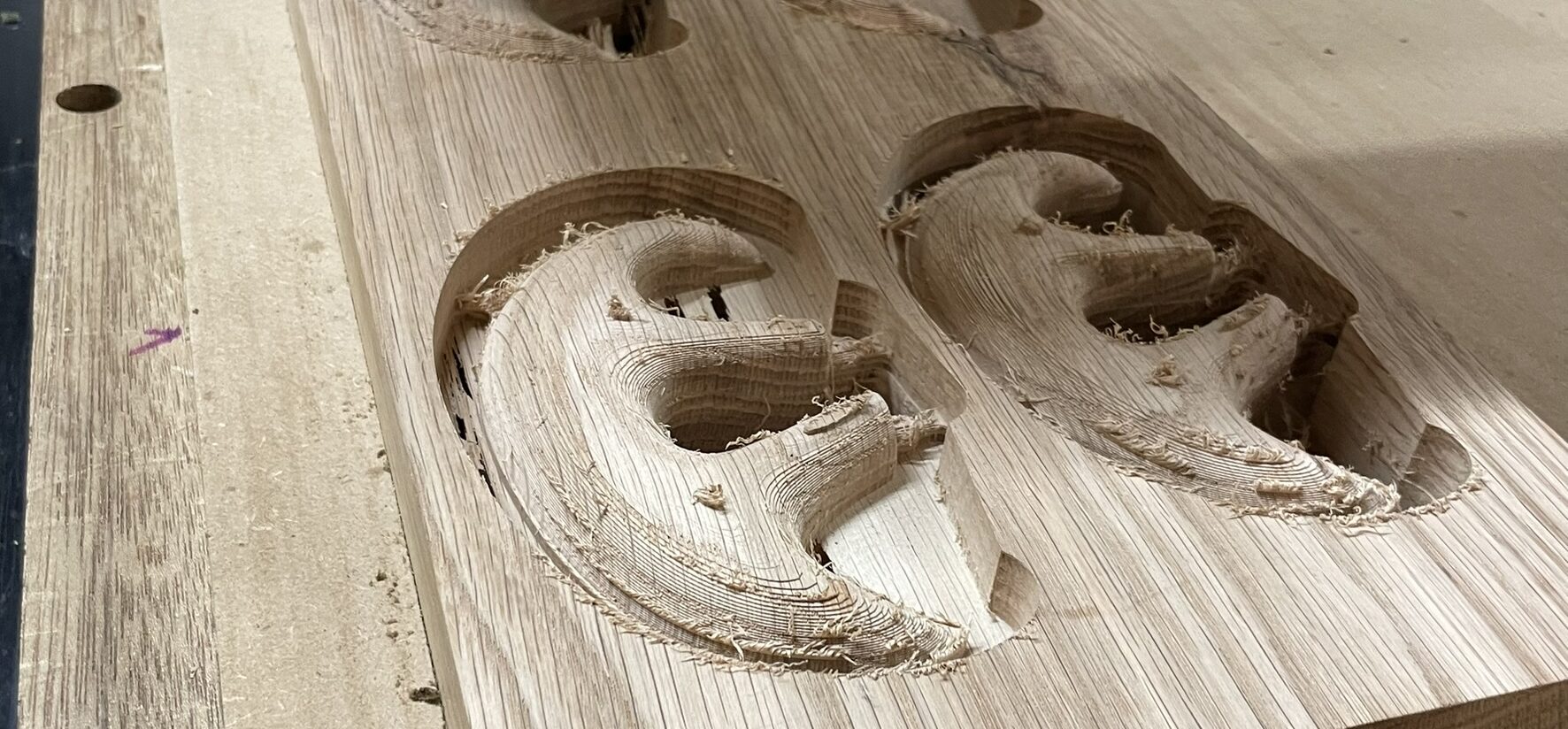
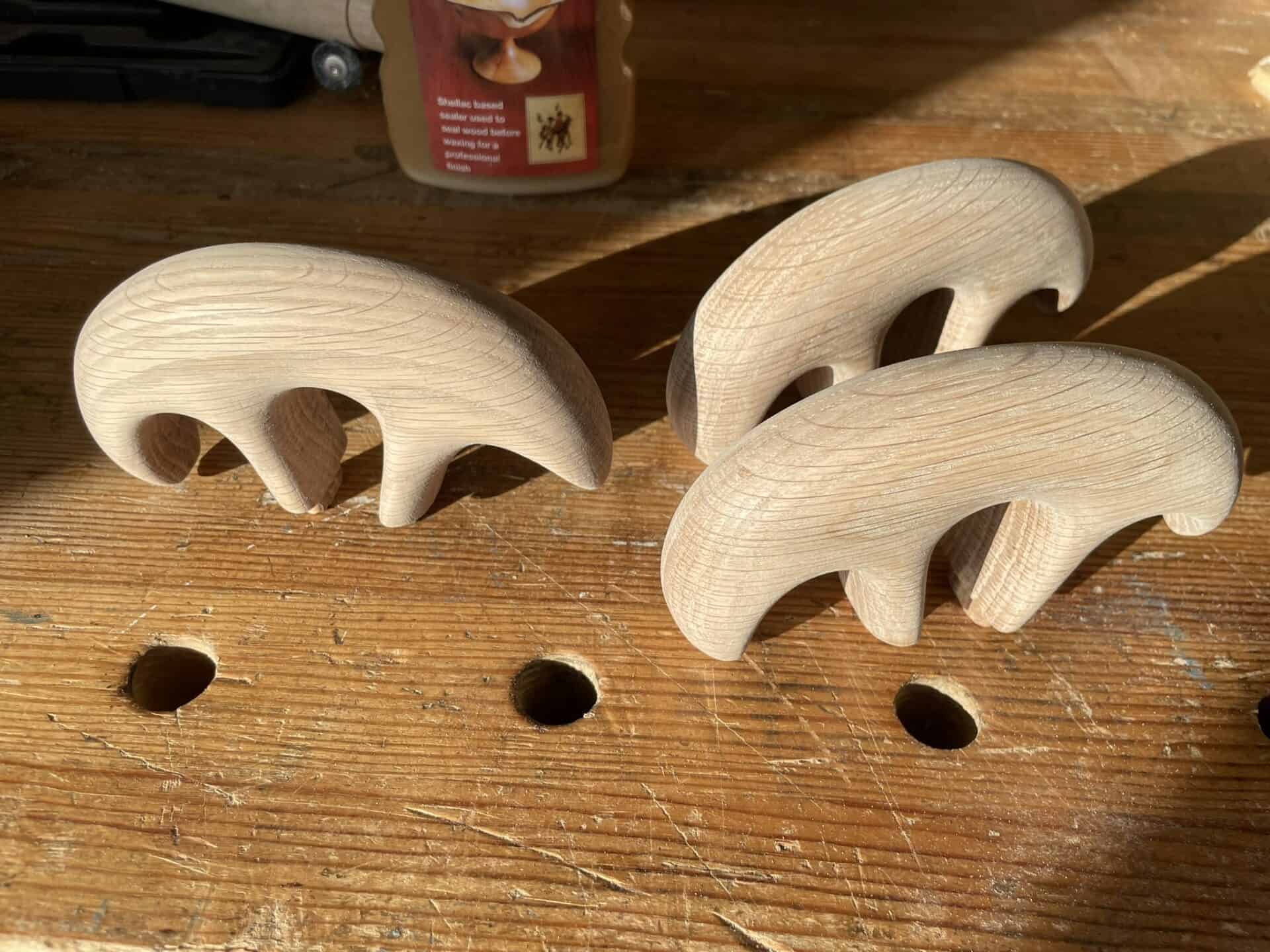
After both sides were complete, I moved on to the hand‑finishing stage. Even with CNC precision, the final feel of a piece like this comes from human hands.
- Refining edges and contours
- Softening transitions
- Enhancing carved details
- Preparing the surface for finishing
A Historic Collaboration: Passing the Tácnbora to The Copper Elf
Once the carving was complete, the final stage of the project required a specialist touch. The Tácnbora was sent to The Copper Elf, a master copper‑smith whose craftsmanship is matched only by his passion for Anglo‑Saxon history.
Not only is he an expert in traditional metalworking techniques, but he’s also an avid studier of early medieval Northumbria—including the very history behind the Tácnbora itself. His knowledge of the period ensured that every metal detail was finished with historical accuracy and respect for the original design.
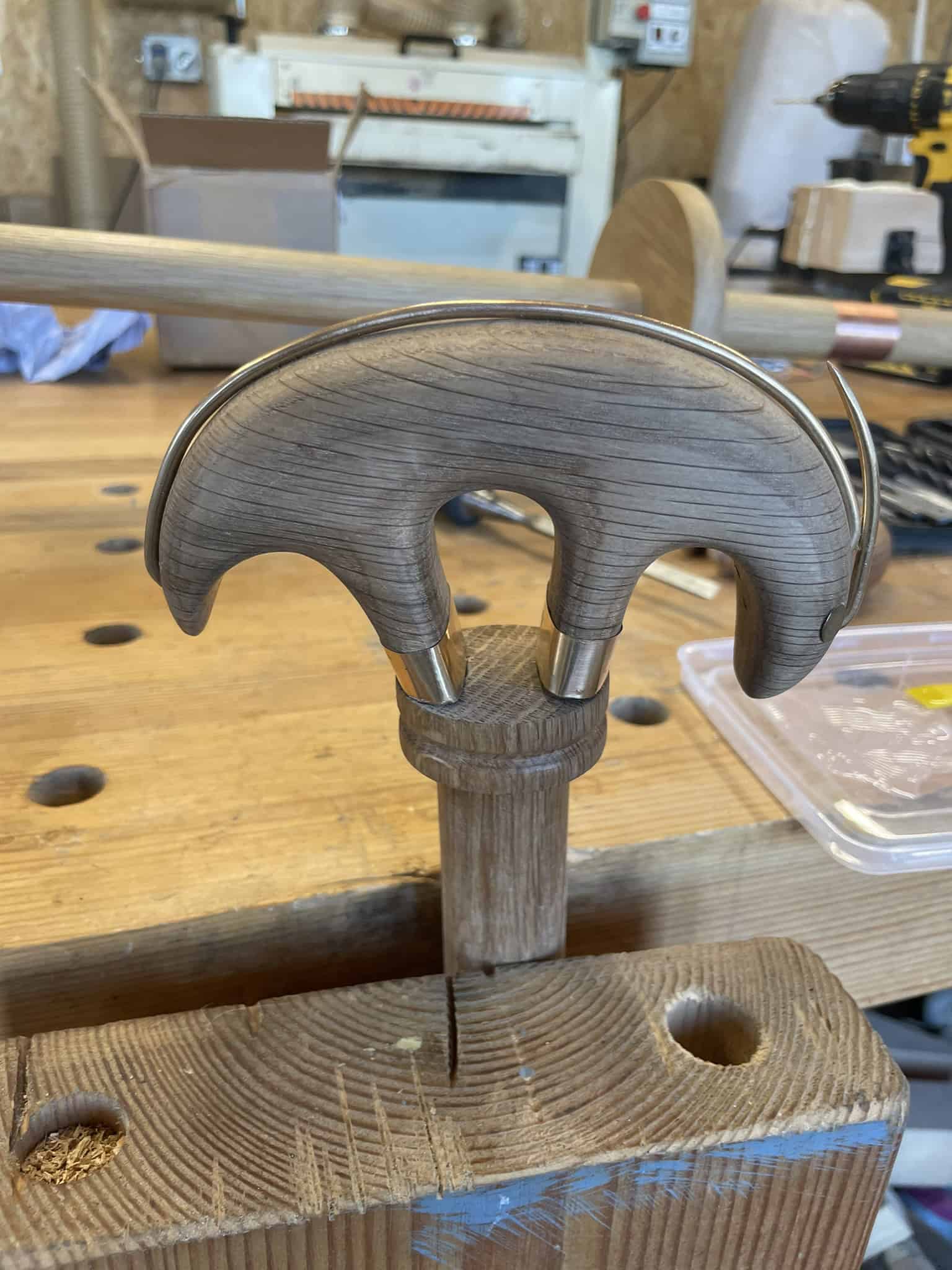
His contribution completed the transformation from carved oak to a fully realised historic figure.
The Final Result
The finished Tácnbora stands as a tribute to Northumbrian craftsmanship—past and present. Carved from local oak, shaped with modern tools, finished by hand, and completed with historically informed copperwork, it bridges centuries of tradition in a way that feels fitting for such an iconic figure.
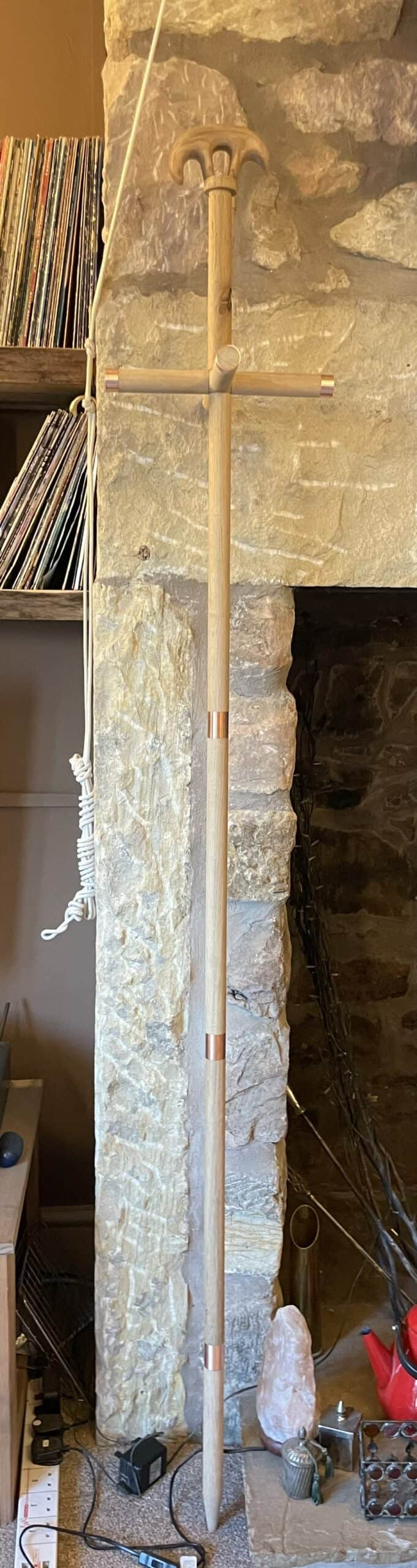
Seeing it completed, ready to take its place at the distillery, was a proud moment.
A Project Rooted in Northumbrian Heritage
This commission wasn’t just about carving wood—it was about honouring a story, a region, and a symbol that has carried meaning for centuries. I’m grateful to the Wooler distillery for trusting me with this recreation, and equally grateful to The Copper Elf for bringing his expertise and historical insight to the final stage.
If you’d like to follow more of my CNC and carving projects, stay tuned—there’s always something new taking shape here at FLI‑CNC.